Archives of Colonialism and Socialism: The GDR, Namibia, and the Film Heritage of Today, DOK Leipzig Archive Market 30.10.2024
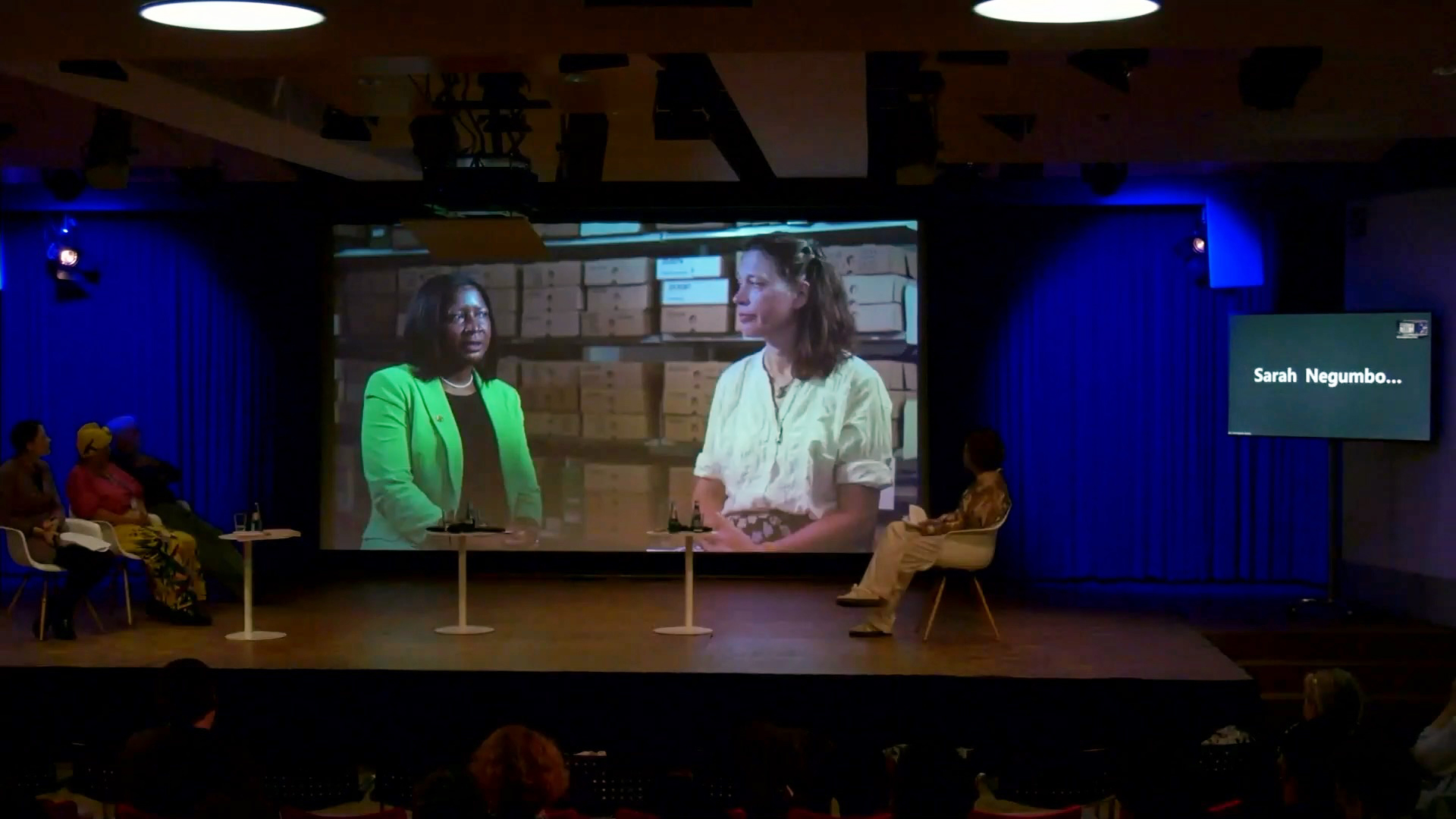
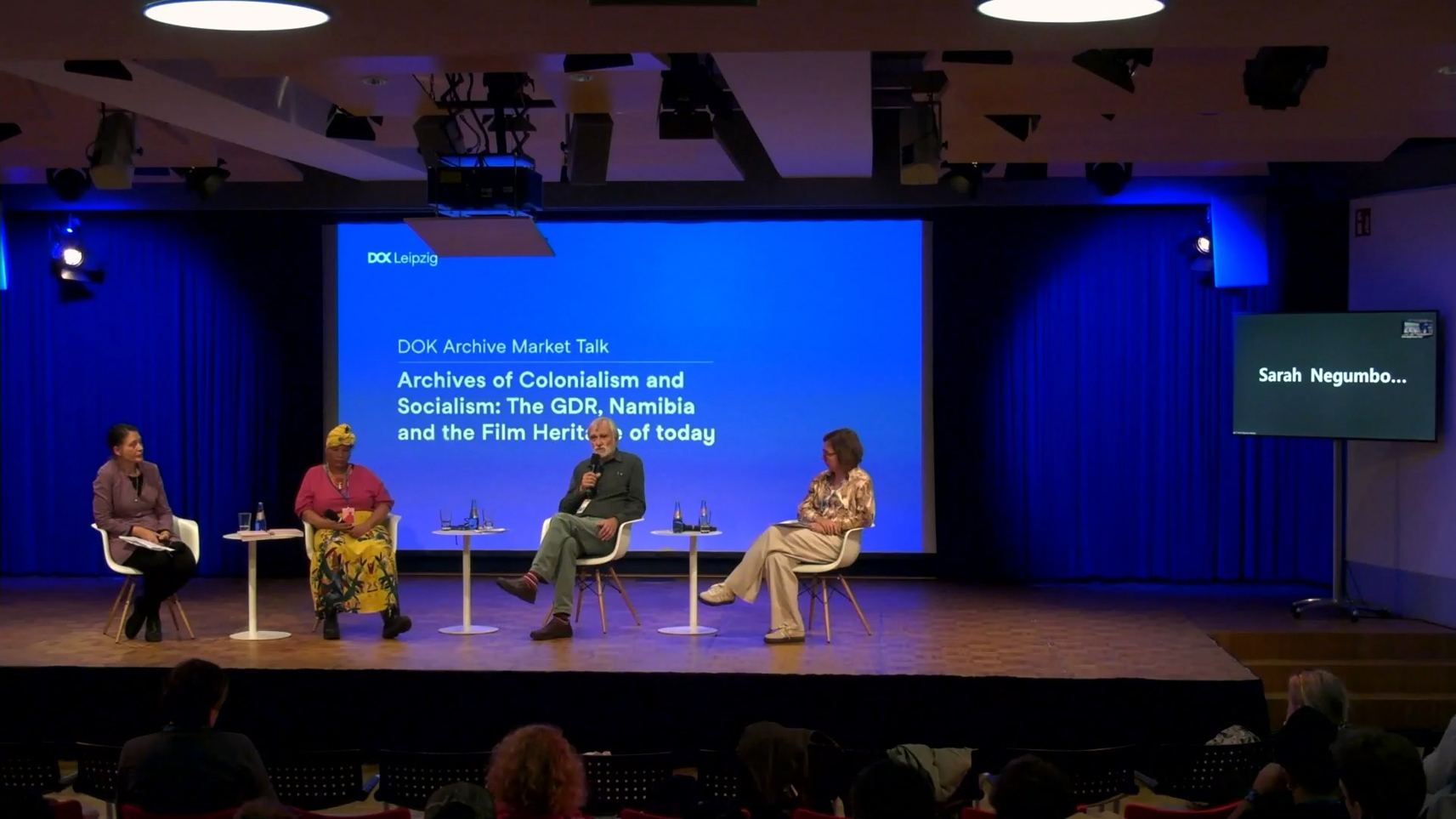
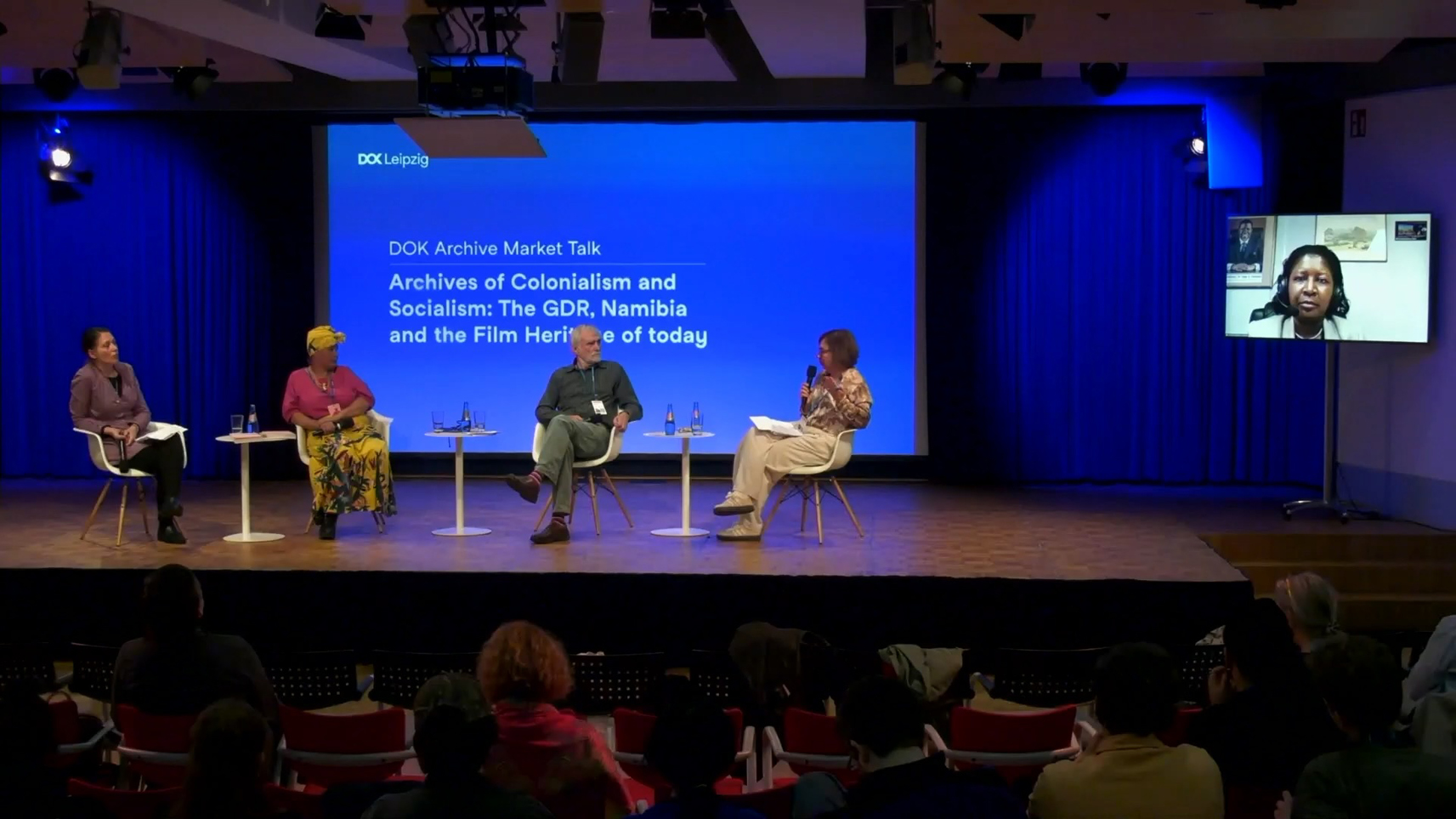
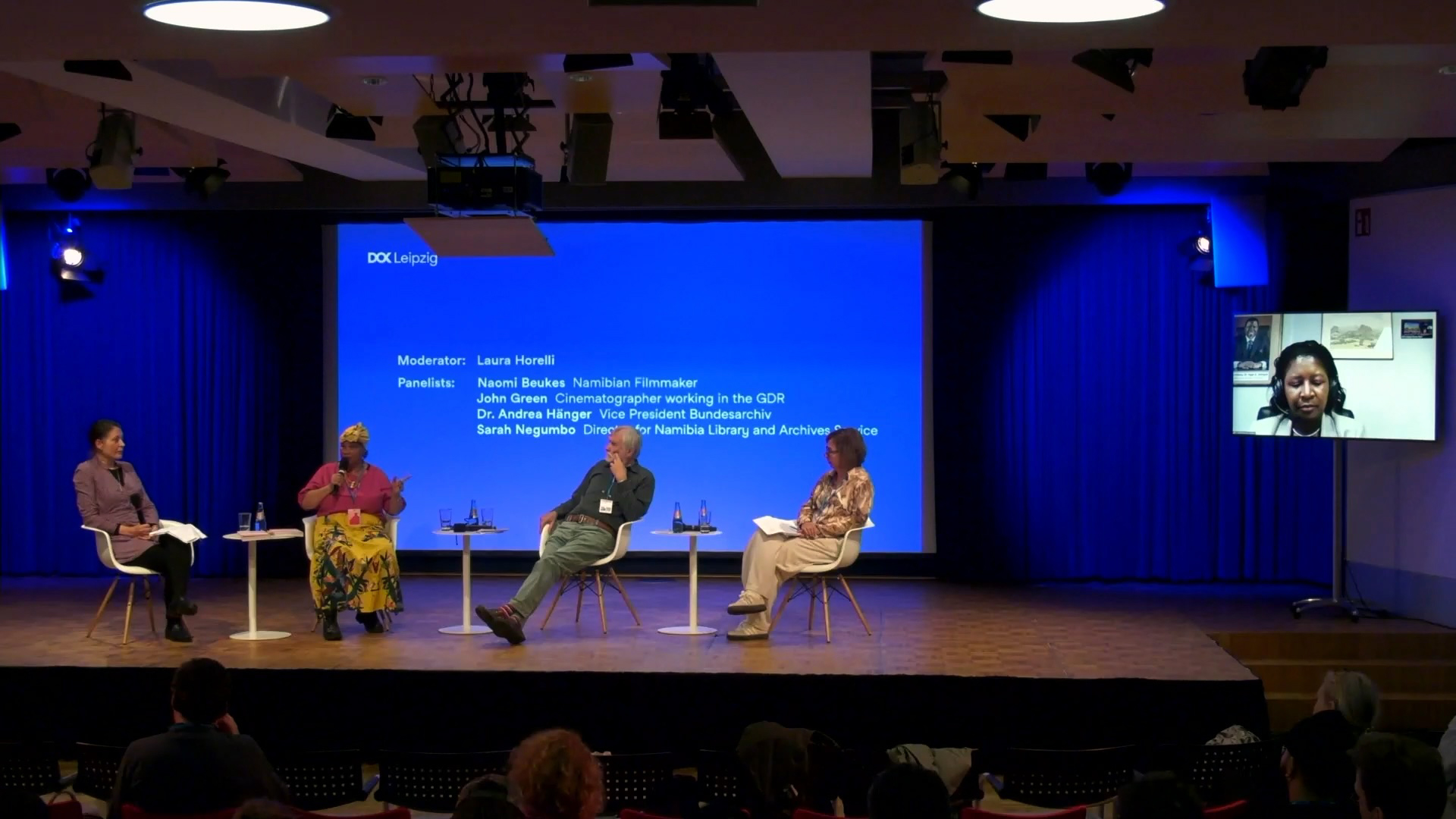
An English version of Dr. Sabine Katins’ documentary, Who’s Afraid of the Black Man (1976), was shown at the Leipzig Documentary Film Festival in 1976, where it won the Golden Dove. The 16mm film reel was found at the Federal Archives of Germany and was digitized for DOK Leipzig Archive Market. The documentary was screened at the festival in 2024, followed by a talk with some of the original crew and representatives of the Federal Archives of Germany and the National Archives of Namibia. A Memorandum of Understanding between the National Archives of Namibia and the German Broadcasting Archives was signed as a result, permitting the National Archives to give out a viewing link for research purposes in Namibia, allowing for unprecedented access to the documentary. Subsequently a digitized English version of the documentary was shown in Namibia as part of the IMAGE RESTITUTION project.
The panel discussion explored the purpose of revisiting the documentary nearly 50 years later and how it continues to be deeply relevant to the present day. The conversation centered largely around the documentary’s history, the difficult process of making it more accessible to the public, and what can be learned from it. Looking back at the darker parts of history has a cost, and part of the discussion centered around the question of whether historical documents like Who’s Afraid of the Black Man run the risk of re-traumatizing viewers. Ultimately, the panelists agreed that greater harm comes from history being obscured and thus at risk of being forgotten and preventing progress being made to colonialism’s deep rooted legacy. Director of the Namibia Library and Archives Service Sarah Negumbo also emphasized the importance of contextualizing the film with educational materials so that it might serve as a more effective and informative historical document.
Cinematographer John Green offered his unique perspective as someone deeply involved in filming the documentary. He discussed the great risk he and the rest of the crew faced in filming under apartheid and the difficulty of coming into contact with the subjects. In John Green’s view, the film was “an interventionist tool” for changing the world, fighting against the suppression of Namibians under apartheid, and the forces of racism and colonialism that continue to this day. Namibian filmmaker Naomi Beukes shared her perspective as someone who grew up under apartheid of how relevant it remains today as the impact of apartheid is still profoundly felt and racial and ethnic divides that cut deep. She focused on the women depicted in the film and the importance of uplifting their role in the struggle for independence which often gets overlooked.
The panel also touched on the issue of ownership—both to whom the struggle depicted in the documentary belongs and who literally owns the copyright to the film and where copies of the film are physically located. Though the documentary largely centers on the Namibian struggle for independence, access to it by a Namibian audience had been next to impossible prior to the IMAGE RESTITUTION project. Vice President of Federal Archives of Germany, Dr Andrea Hänger discussed the efforts being made to digitalize historical documents such as this documentary, allowing more people to watch it and learn from it.